By now, many of us have made the switch to digital cameras from film cameras. If you are like me, the one thing you may have noticed when you use digital is that you wind up taking a lot more pictures than you used to because you don't have to worry about film processing costs.
But, what do you do with all those extra pictures? The first thing you probably do is go through and get rid of all the really bad photos. But, usually that still leaves many, many really good pictures...usually of family, friends, places and events. But, instead of sitting in a shoebox, they now reside on your computer, taking up valuable hard drive space. You can, of course, copy them to CD's and DVD's and remove them from your hard drive, but then your newly created CD's and DVD's go into a shoebox, perhaps never to be seen again.
Here are a couple of solutions where you might put some of your best pictures and view them on a more frequent basis: Take your best photos and turn them into either computer wallpaper and/or screensavers. It isn't that hard to do and I am going to recommend a couple of programs so you can do either or both for free.
Let's talk first about screensavers. Screensavers were once used for just what the name implies...saving your screen from being burned in by an image that was on the screen far too long. Those days are long gone as today's computer screens are immune from burn-in. Today, we use screensavers for fun. After so many minutes of non-use, your screensaver program automatically activates itself and shows things on your screen. Microsoft built several fun screensavers right into Windows.
But, why not create your own screensaver and use it to show your favorite digital pictures? Our friends at CNET recently posted a short article on how to do it. It is worth reading to get of feel for how to do it and what can be done with your own screensaver, although the software they recommend costs $40.
There is a free software program out there called "Dcat Screen Saver,"that has received the highest ratings from reviewers and will allow you to include both audio and video in your screensaver. It has many many transition effects you can use to go from one picture to another plus you control the time that each picture is on the screen. It gives you a lot of control over what images are used and how they are used, so it is worth considering if you want to customize a screensaver for your computer.
Wallpapers are little different than screensavers. In case you don't know, wallpaper is the image you have on the screen when you don't have any programs running or when you press your "Show Desktop" icon. Usually, you can only show one wallpaper at a time and you have to go into Windows to change it.
There are free programs out there like "Webshots" that do a nice job with both wallpaper and screensavers, although you have to pay money to get the most of them. And they are showing other people's beautiful pictures, not yours.
If you want create your own wallpaper, control its use, and do it on the cheap using your images, you might try the free version of "Wallpaper Master." It comes in both a free and pro version, but the free version will probably work just fine for most of us. You get complete control of how your wallpaper works on your computer. You can create different categories and have up to 5,000 pictures in each category. There are far too many features to list here, so I suggest you visit their website to learn more.
I can't think of a better way to put your mostly unseen photographs to work than to create your own screensaver and wallpaper. Why not give it a try and see what I mean.

Tuesday, April 18, 2006


Sunday, April 16, 2006
More on Mac's "Boot Camp"
A week or so ago, I told you about the Macintosh "Boot Camp" beta software from Apple. This handy-dandy software lets you install Windows XP on a Macintosh computer (Intel-based Mac's only) right alongside the Mac operating system..then allows you to choose either a Mac or Windows operating system at boot-up.
There has been a lot written about this new software lately in the technology press, mostly raves about the concept itself. But how does it work?
Our friends at CNET have done some in depth testing and come up with some very interesting results, mostly positive. By going to their special web page, you can watch a 90 second video on how it works, then go over to their in-depth testing page and read all the specifics.
If you are intrigued as I am about the concept, you will enjoy reading the article. If you don't want to take the time, the bottom line is that the system works well. Windows runs just fine on the Intel-based Mac computer. Of course it should as Windows was made to run on Intel processors.
You do have to choose which operating system you want to use at startup...you cannot run the two side-by-side. However, it is easy to change from one to the other in midstream just by holding down two buttons together for a couple of seconds.
Overall, Windows performed quite well on the Mac computer. There were differences in some program performance, as would be expected. For instance, the music software "iTunes" ran faster on the Mac than Windows, but that it not unusual since iTunes was originally written for the Mac. Games ran much better on Windows than the Mac, but the Mac really isn't a gaming machine. But, by having both systems on your computer, you can enjoy the best of both worlds.
Of course, doing that would cost you a lot of money. I would love to run my graphic software like Photoshop on a Mac as it is preferred by most graphic professionals. But, at this point, I am not going to buy a few thousand dollars worth of Mac-based software that I already own in the Windows version. So, although I am very intrigued and happy to see that you can now have Mac OS-X running on the same machine as Windows, it is a bit too late in the game for someone like me.
There has been a lot written about this new software lately in the technology press, mostly raves about the concept itself. But how does it work?
Our friends at CNET have done some in depth testing and come up with some very interesting results, mostly positive. By going to their special web page, you can watch a 90 second video on how it works, then go over to their in-depth testing page and read all the specifics.
If you are intrigued as I am about the concept, you will enjoy reading the article. If you don't want to take the time, the bottom line is that the system works well. Windows runs just fine on the Intel-based Mac computer. Of course it should as Windows was made to run on Intel processors.
You do have to choose which operating system you want to use at startup...you cannot run the two side-by-side. However, it is easy to change from one to the other in midstream just by holding down two buttons together for a couple of seconds.
Overall, Windows performed quite well on the Mac computer. There were differences in some program performance, as would be expected. For instance, the music software "iTunes" ran faster on the Mac than Windows, but that it not unusual since iTunes was originally written for the Mac. Games ran much better on Windows than the Mac, but the Mac really isn't a gaming machine. But, by having both systems on your computer, you can enjoy the best of both worlds.
Of course, doing that would cost you a lot of money. I would love to run my graphic software like Photoshop on a Mac as it is preferred by most graphic professionals. But, at this point, I am not going to buy a few thousand dollars worth of Mac-based software that I already own in the Windows version. So, although I am very intrigued and happy to see that you can now have Mac OS-X running on the same machine as Windows, it is a bit too late in the game for someone like me.
Saturday, April 15, 2006
Firefox Update
If you use Firefox as your Web browser, you need to know there is an update available that you can download quite easily. Mozilla describes the update as having "significant security and stability improvements." Details on the security vulnerabilities being patched were not available when Firefox 1.5.0.2 was released as a high-priority update.
Users already running Firefox 1.5 will receive an automated update notification within 24 to 48 hours. The new version can also be applied manually by selecting "Check for Updates" from the Help menu. The process is quick and easy.
Users already running Firefox 1.5 will receive an automated update notification within 24 to 48 hours. The new version can also be applied manually by selecting "Check for Updates" from the Help menu. The process is quick and easy.
Friday, April 14, 2006
Wal-Mart Controlling the Gaming World?
There is an interesting story that appeared in the most recent edition of the on-line magazine, "The Escapist." In it, the writer claims that Wal-Mart is in virtually complete control of what video games make it to the market. How do they control it? Because of the fact that they are the nation's largest retailer...and if they make a decision not to carry a game, that particular game is almost never brought to the market.
According to The Escapist, Wal-Mart has shaped the video game market in much the same way it shaped the markets for CDs and DVDs. Says game designer Allen Varney who wrote the article:
"The retail games you buy at GameStop or Best Buy or online are the games Wal-Mart has decided you can buy. Publisher sales reps inform Wal-Mart buyers of games in development; the games' subjects, titles, artwork and packaging are vetted and sometimes vetoed by Wal-Mart. If Wal-Mart tells a top-end publisher it won't carry a certain game, the publisher kills that game. In short, every triple-A game sold at retail in North America is managed start to finish, top to bottom, with the publisher's gaze fixed squarely on Wal-Mart, and no other."
While I really don't give a hoot about what video games come to the marketplace, I really find it disturbing that Wal-Mart is in such control of our lives. I suppose it is a normal byproduct of a world controlled by giant corporations, but it is still sad. Giving Wal-Mart control of what videos we can watch or what music we can listen to, or what games we can buy is tantamount to giving McDonalds control over what we can eat. To quote a famous musician, "Mediocrity is King and creativity is a liability."
According to The Escapist, Wal-Mart has shaped the video game market in much the same way it shaped the markets for CDs and DVDs. Says game designer Allen Varney who wrote the article:
"The retail games you buy at GameStop or Best Buy or online are the games Wal-Mart has decided you can buy. Publisher sales reps inform Wal-Mart buyers of games in development; the games' subjects, titles, artwork and packaging are vetted and sometimes vetoed by Wal-Mart. If Wal-Mart tells a top-end publisher it won't carry a certain game, the publisher kills that game. In short, every triple-A game sold at retail in North America is managed start to finish, top to bottom, with the publisher's gaze fixed squarely on Wal-Mart, and no other."
While I really don't give a hoot about what video games come to the marketplace, I really find it disturbing that Wal-Mart is in such control of our lives. I suppose it is a normal byproduct of a world controlled by giant corporations, but it is still sad. Giving Wal-Mart control of what videos we can watch or what music we can listen to, or what games we can buy is tantamount to giving McDonalds control over what we can eat. To quote a famous musician, "Mediocrity is King and creativity is a liability."
Thursday, April 13, 2006
Google to Offer Free Calendar Service
The amazing Google is adding another weapon to their arsenal. Beginning today, Google will begin offering a free web calendar that offers a variety of features to make using Web calendars as easy as desktop calendars such as Outlook.
Among its other features, the new calendar will allow users to "drag and drop" events from one calendar to another. And like other web-based calendars, you can store appointments online, receive reminders about them and share those plans with others. In addition, there is a feature that allows users of Google Calendar to send invitations and manage guest lists.
The new service takes advantage of slick Web programming tricks using Javascript and XML along with RSS. But perhaps the biggest breakthrough is the calendar's use of "natural language processing" technology that simplifies how events are entered. The feature allows users to type simple commands like "leave work today at 4:30 p.m." or "drinks Thursday with Bob" that the system can interpret and automatically insert into the calendar. Events can be private, shared with friends, or made public on the Web.
Users of Google's free e-mail service Gmail may find the Google Calendar particularly useful. Google's software scours Gmail to recognize mentions of events and then automatically offers the user to add the date information to the calendar. Users can also add entries in simple text, such as "Coffee with Jim on Saturday at 11 a.m. at Rock Park Cafe," thereby eliminating the need to fill out forms.
The new services opens a new level of competition with rivals such as Yahoo, Microsoft and Evite.
Among its other features, the new calendar will allow users to "drag and drop" events from one calendar to another. And like other web-based calendars, you can store appointments online, receive reminders about them and share those plans with others. In addition, there is a feature that allows users of Google Calendar to send invitations and manage guest lists.
The new service takes advantage of slick Web programming tricks using Javascript and XML along with RSS. But perhaps the biggest breakthrough is the calendar's use of "natural language processing" technology that simplifies how events are entered. The feature allows users to type simple commands like "leave work today at 4:30 p.m." or "drinks Thursday with Bob" that the system can interpret and automatically insert into the calendar. Events can be private, shared with friends, or made public on the Web.
Users of Google's free e-mail service Gmail may find the Google Calendar particularly useful. Google's software scours Gmail to recognize mentions of events and then automatically offers the user to add the date information to the calendar. Users can also add entries in simple text, such as "Coffee with Jim on Saturday at 11 a.m. at Rock Park Cafe," thereby eliminating the need to fill out forms.
The new services opens a new level of competition with rivals such as Yahoo, Microsoft and Evite.
Wednesday, April 12, 2006
The Internet May Change Television Forever
If you follow the comings and going of the TV and movie industry, you just knew that one day the concrete dam behind which Hollywood protects it movie and TV properties would start showing cracks and eventually break, releasing a flood of its products over the Internet. The first crack came last week, as we informed you in this blog, when Hollywood allowed many of its newest films to be available by download (no matter how badly this was executed, as we also pointed out).
The next crack has now appeared...and its a big one. Disney Studios, owners of ABC Television, has announced that it is going to make many of its hottest shows available for viewing for free via the Net. Beginning April 30, ABC shows like "Desperate Housewives," "Commander In Chief" and "Lost" will be available for viewing online. The programs, which will be available the morning after they air on ABC stations, can be rewound, fast-forwarded and paused, but will include advertisements that cannot be avoided, or fast-forwarded.
Now, here is the really interesting part. At the beginning of show, you will be asked to choose which advertiser or product you wish to view during the show. In addition, you are asked whether you want to watch a traditional commercial or an interactive game commercial. After selecting it, the show begins...but instead of five commercial breaks per hour show, there will only be three, and each one will be from the advertiser you chose in the beginning. Each commercial break is only one minute long.
Features like this will no doubt present an interesting value proposition to advertising planners, who are fast losing confidence in the effectiveness of traditional ads and looking for new ways to reach potential customers. Indeed, AT&T, Ford, Procter & Gamble and Toyota are all participating in the trial. If it's a success, we'll undoubtedly see other networks following suit.
All this brings serious implications for the cable industry, which could see its on-demand services challenged before they're ever rolled out, especially as the connection between the Net and the living room entertainment center get easier. Also, local TV stations could suffer as their advertising revenues drop considerably as people may prefer to watch their TV's via the new kind of home entertainment servers which are showing up in the home and are connected to the Internet.
The times...they are a changin'.
The next crack has now appeared...and its a big one. Disney Studios, owners of ABC Television, has announced that it is going to make many of its hottest shows available for viewing for free via the Net. Beginning April 30, ABC shows like "Desperate Housewives," "Commander In Chief" and "Lost" will be available for viewing online. The programs, which will be available the morning after they air on ABC stations, can be rewound, fast-forwarded and paused, but will include advertisements that cannot be avoided, or fast-forwarded.
Now, here is the really interesting part. At the beginning of show, you will be asked to choose which advertiser or product you wish to view during the show. In addition, you are asked whether you want to watch a traditional commercial or an interactive game commercial. After selecting it, the show begins...but instead of five commercial breaks per hour show, there will only be three, and each one will be from the advertiser you chose in the beginning. Each commercial break is only one minute long.
Features like this will no doubt present an interesting value proposition to advertising planners, who are fast losing confidence in the effectiveness of traditional ads and looking for new ways to reach potential customers. Indeed, AT&T, Ford, Procter & Gamble and Toyota are all participating in the trial. If it's a success, we'll undoubtedly see other networks following suit.
All this brings serious implications for the cable industry, which could see its on-demand services challenged before they're ever rolled out, especially as the connection between the Net and the living room entertainment center get easier. Also, local TV stations could suffer as their advertising revenues drop considerably as people may prefer to watch their TV's via the new kind of home entertainment servers which are showing up in the home and are connected to the Internet.
The times...they are a changin'.
Monday, April 10, 2006
Your Computer and Windows Vista
Will your computer run the new Windows Vista when it is released early next year? That is a question many of us are pondering. Although Microsoft has yet to release all the specs that will help us answer this question, the Gartner Group has released a study that shows the vast majority of our computers will run Vista (if they run XP), although only about half of them will run it to its full potential.
The Gartner study says today's mainstream processors and hard drives offer plenty of performance and capacity to keep up with the new operating system...and Microsoft offers some basic guidelines for Vista on its Web site. But while it does take a minimum of 512MB of RAM, Gartner says your computer should have 1 Gb of memory to make it work best...and you need a more up-to-date graphics processor also.
Microsoft is going to release a "Windows Capable" program, which helps highlight PCs capable of being upgraded with the OS for consumers. But that has not happened yet. And it has not yet release its final hardware recommendations for the new OS, including details on the hardware necessary to run its full Aero interface.
Here are some interesting quotes from the Gartner report:
"Since most organizations keep PCs for three to five years—we recommend three years for mainstream notebook users and four years for mainstream desktops. PCs purchased in 2006 will be in service well after Windows Vista ships"
Choosing the right graphics will require the most advanced planning. Vista's most basic user interface, which is expected to be able to run on just about any PC released in the recent past, will offer a redesigned start menu and taskbar, along with tweaks to the control panel and features such as search. But, some of the new features require extra graphics horsepower, which many, but not all, current graphics processors can do.
Windows Aero, the advanced interface, adds a translucent task bar and window frames, in addition to things like real-time thumbnail previews. Under the hood, it also employs a new WDDM (Windows Display Driver Model), which promises to increase a PCs' stability.
So while we have a while yet to plan the move to Windows Vista, it is good to know a little more now what we have to think about if we want to migrate.
The Gartner study says today's mainstream processors and hard drives offer plenty of performance and capacity to keep up with the new operating system...and Microsoft offers some basic guidelines for Vista on its Web site. But while it does take a minimum of 512MB of RAM, Gartner says your computer should have 1 Gb of memory to make it work best...and you need a more up-to-date graphics processor also.
Microsoft is going to release a "Windows Capable" program, which helps highlight PCs capable of being upgraded with the OS for consumers. But that has not happened yet. And it has not yet release its final hardware recommendations for the new OS, including details on the hardware necessary to run its full Aero interface.
Here are some interesting quotes from the Gartner report:
"Since most organizations keep PCs for three to five years—we recommend three years for mainstream notebook users and four years for mainstream desktops. PCs purchased in 2006 will be in service well after Windows Vista ships"
"While nearly all PCs on the market today will run Windows Vista, we estimate that about half will not enable the user to take full advantage of the advanced Windows Aero user experience, so care must be taken to properly configure them.
"This will be important for some users, but less important for others. Organizations that plan on upgrading 2006 PCs to Windows Vista, or those that want to keep their options open, need to buy the right PCs now to reduce migration costs later."
Choosing the right graphics will require the most advanced planning. Vista's most basic user interface, which is expected to be able to run on just about any PC released in the recent past, will offer a redesigned start menu and taskbar, along with tweaks to the control panel and features such as search. But, some of the new features require extra graphics horsepower, which many, but not all, current graphics processors can do.
Windows Aero, the advanced interface, adds a translucent task bar and window frames, in addition to things like real-time thumbnail previews. Under the hood, it also employs a new WDDM (Windows Display Driver Model), which promises to increase a PCs' stability.
So while we have a while yet to plan the move to Windows Vista, it is good to know a little more now what we have to think about if we want to migrate.
Sunday, April 09, 2006
Did AT&T Violate All Our Privacies?
The Electronic Frontier Foundation (EFF) has filed a major lawsuit against the largest telecommunications carrier in the U.S....namely AT&T. The EFF is alleging that AT&T has purposely diverted customer traffic to the National Security Agency for years as a means of aiding the NSA's covert surveillance program that was revealed last December. They also claim they claim to have the documents to prove it.
According to EFF, they have a sworn statement from a retired AT&T telecommunications technician and several internal AT&T documents that show the company gave the government unfettered access to its more than 300 terabyte "Daytona" database of caller information, one of the largest databases in the world.
"The evidence that we are filing supports our claim that AT&T is diverting Internet traffic into the hands of the NSA wholesale, in violation of federal wiretapping laws and the Fourth Amendment," said EFF staff attorney Kevin Bankston. "More than just threatening individuals' privacy, AT&T's apparent choice to give the government secret, direct access to millions of ordinary Americans' Internet communications is a threat to the Constitution itself. We are asking the Court to put a stop to it now."
These documents, among others, at first worried the government (which is not a party to the lawsuit), which is concerned about matters of national security being discussed in open court. The Department of Justice has looked over the materials, though, and just announced that it has no objection to the EFF case so long as the documents and proceedings are kept under seal. That seems to lend a fair amount credence to the EFF case.
On average day AT&T carries some 300 million voice calls as well as over 4,000 terabytes of data, approximately 200 times the amount of data contained in all the books in the Library of Congress. The EFF says they chose to sue AT&T because they are the largest and if they are successful with this case, it would probably convince other firms to stop aiding the NSA, if for no other reason than to avoid class-action lawsuits and massive fines.
The NSA and the Bush Administration may have crossed the line of demarcation as spelled out in the 1978 law that protects us from unfettered wire tapping. And while we all want to help in rooting out terrorist's that threaten our country, there needs to be some sort of checks and balances put in place regarding wire tapping and our right to privacy. After all, our constitution is designed with many checks and balances to make sure no one person or entity can take total control of our government and our lives. And, in the last few decades, it is the concept of "National Security" that was used as the excuse to violate our basic rights.
According to EFF, they have a sworn statement from a retired AT&T telecommunications technician and several internal AT&T documents that show the company gave the government unfettered access to its more than 300 terabyte "Daytona" database of caller information, one of the largest databases in the world.
"The evidence that we are filing supports our claim that AT&T is diverting Internet traffic into the hands of the NSA wholesale, in violation of federal wiretapping laws and the Fourth Amendment," said EFF staff attorney Kevin Bankston. "More than just threatening individuals' privacy, AT&T's apparent choice to give the government secret, direct access to millions of ordinary Americans' Internet communications is a threat to the Constitution itself. We are asking the Court to put a stop to it now."
These documents, among others, at first worried the government (which is not a party to the lawsuit), which is concerned about matters of national security being discussed in open court. The Department of Justice has looked over the materials, though, and just announced that it has no objection to the EFF case so long as the documents and proceedings are kept under seal. That seems to lend a fair amount credence to the EFF case.
On average day AT&T carries some 300 million voice calls as well as over 4,000 terabytes of data, approximately 200 times the amount of data contained in all the books in the Library of Congress. The EFF says they chose to sue AT&T because they are the largest and if they are successful with this case, it would probably convince other firms to stop aiding the NSA, if for no other reason than to avoid class-action lawsuits and massive fines.
The NSA and the Bush Administration may have crossed the line of demarcation as spelled out in the 1978 law that protects us from unfettered wire tapping. And while we all want to help in rooting out terrorist's that threaten our country, there needs to be some sort of checks and balances put in place regarding wire tapping and our right to privacy. After all, our constitution is designed with many checks and balances to make sure no one person or entity can take total control of our government and our lives. And, in the last few decades, it is the concept of "National Security" that was used as the excuse to violate our basic rights.
Saturday, April 08, 2006
Of Mice and Men
I don't think I have ever written a blog about the simple little device we use everyday and probably take for granted...the computer mouse. But three new mice from Microsoft caught my eye so I thought I would create a precedent and write a mouse blog.
All three mice use the company's High Definition technology, which is aimed at supplying improved mouse responsiveness, at least six months of battery life, and smoother tracking over uneven surfaces. According to Microsoft, they have sold more than 1 million products from the High Definition line since its debut in September.
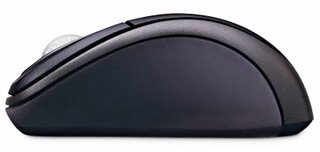
The first of this new generation of mice, which Microsoft put on the market this week, is a wireless optical mouse intended for laptop users. The Wireless Optical Notebook Mouse 3000, which sells for $29, is billed as an upgrade to the company's best-selling Wireless Notebook Optical Mouse. Redmond describes the device as a more portable, easier-to-stow option for laptop users and said its new design features improved mousing in cramped spaces such as airplanes or small cafe tables.
Next, the five-button, ambidextrous Wireless Laser Mouse 5000 is aimed at desktop users and is due to hit the shelves at the end of this month. It will retail for $49 That device will contain a Magnifier button, designed to allow for real-time enlargement and editing of any section of a user's screen. It will also bear Microsoft's familiar Tilt Wheel technology, which permits horizontal and vertical scrolling through pages.
In June, Microsoft plans to release the Wireless Optical Mouse 2000, another desktop-oriented gadget. At $29, the three-button, silver-accented device is being marketed as a more affordable alternative to the laser mouse.
If the features of these mice interest you, but you don't like buying Microsoft products, be aware that Microsoft says it will license three of its hardware technologies to other manufacturers, including the Magnifier and Tilt Wheel tools.
Happy Mousing, everybody!!
All three mice use the company's High Definition technology, which is aimed at supplying improved mouse responsiveness, at least six months of battery life, and smoother tracking over uneven surfaces. According to Microsoft, they have sold more than 1 million products from the High Definition line since its debut in September.

The first of this new generation of mice, which Microsoft put on the market this week, is a wireless optical mouse intended for laptop users. The Wireless Optical Notebook Mouse 3000, which sells for $29, is billed as an upgrade to the company's best-selling Wireless Notebook Optical Mouse. Redmond describes the device as a more portable, easier-to-stow option for laptop users and said its new design features improved mousing in cramped spaces such as airplanes or small cafe tables.
Next, the five-button, ambidextrous Wireless Laser Mouse 5000 is aimed at desktop users and is due to hit the shelves at the end of this month. It will retail for $49 That device will contain a Magnifier button, designed to allow for real-time enlargement and editing of any section of a user's screen. It will also bear Microsoft's familiar Tilt Wheel technology, which permits horizontal and vertical scrolling through pages.
In June, Microsoft plans to release the Wireless Optical Mouse 2000, another desktop-oriented gadget. At $29, the three-button, silver-accented device is being marketed as a more affordable alternative to the laser mouse.
If the features of these mice interest you, but you don't like buying Microsoft products, be aware that Microsoft says it will license three of its hardware technologies to other manufacturers, including the Magnifier and Tilt Wheel tools.
Happy Mousing, everybody!!
Friday, April 07, 2006
Important Fix Due Next Week for Windows
This coming Tuesday, Microsoft will release a new patch for Windows XP that is designed to fix several serious problems. At least one of the alerts is deemed "critical," Microsoft's highest risk rating, the software maker said in a notice posted on its Web site yesterday. It tags as critical any security threat that could allow a malicious Internet worm to spread without any action required on the part of the user.
The "big fix" will be for its Internet Explorer Web browser. It will include a comprehensive update with multiple fixes, including one for the publicly known "CreateTextRange" vulnerability. Microsoft did not specify what other issues its additional Tuesday patches will repair, or how many flaws will be tackled. To date, researchers have noted several unpatched flaws in IE. The CreateTextRange bug is considered most critical by experts. The flaw is being exploited by malicious Web sites to install spyware, remote-control software and Trojan horses on vulnerable PCs.
As part of its monthly patch day, Microsoft also plans to release an updated version of the Windows Malicious Software Removal Tool. The software detects and removes common malicious code placed on computers.
If you don't have your computer set for automatically installing Microsoft fixes, make sure you download this fix next week...Especially if you use Internet Explorer as your Web browser.
The "big fix" will be for its Internet Explorer Web browser. It will include a comprehensive update with multiple fixes, including one for the publicly known "CreateTextRange" vulnerability. Microsoft did not specify what other issues its additional Tuesday patches will repair, or how many flaws will be tackled. To date, researchers have noted several unpatched flaws in IE. The CreateTextRange bug is considered most critical by experts. The flaw is being exploited by malicious Web sites to install spyware, remote-control software and Trojan horses on vulnerable PCs.
As part of its monthly patch day, Microsoft also plans to release an updated version of the Windows Malicious Software Removal Tool. The software detects and removes common malicious code placed on computers.
If you don't have your computer set for automatically installing Microsoft fixes, make sure you download this fix next week...Especially if you use Internet Explorer as your Web browser.
Wednesday, April 05, 2006
Odds and Ends
Here is a roundup of generally interesting news from the world of technology:
Jury Duty Scam
Here's a new identity theft scam that is making the rounds: Thieves who pretend to be from your local court call you and say you failed to report for jury duty and that a warrant has been issued for your arrest. Then they ask for your social security number, birth date, etc. Many folks who would never be fooled by an email scam will give out this info over the phone. Please don't do it! Hang up and call the court yourself or go there in person to be sure it's the real deal.
Chinese Man Tries to Sell Soul
A man in his late 20s in Jiaxing, a city near Shanghai, has attempted to sell his soul on Taobao, China's top online auction site, attracting bids from some 58 soul-searching buyers before the posting was pulled. After reviewing their policies, a spokesman for Taobao said they were not opposed to the idea of soul selling online, but wanted more proof that the seller could provide the goods.
"After some discussion, we decided that we will allow the member to sell his soul on Taobao, but only if he can provide written permission from a 'higher authority'," he said.
Taobao made its decision as Chinese around the world on Wednesday observed Qing Ming, a traditional holiday where many travel to their ancestors' graves to clean them and offer gifts to the spirits. Taobao is no stranger to odd items being put up for auction, with past sale items including advertising space on one member's forehead.
Netflix Sues Blockbuster
Online DVD rental firm Netflix is suing rival Blockbuster for patent infringement, asking a federal judge in Northern California to shut down Blockbuster's 18-month-old online rental service and award Netflix damages.
Netflix holds two U.S. patents for its business methodology, which calls for subscribers to pay a monthly fee to select and rent DVD’s from the company's Web site and to maintain a list of titles telling Netflix in which order to ship the films, according to the patents, which were included as exhibits in the lawsuit.
The lawsuit says Blockbuster, which launched its online rental service in 2004, was aware that Netflix had obtained a patent for its business method and was seeking a second at that time, but willfully and deliberately violated the existing patent. Netflix is demanding a jury trial and asks that Blockbuster Online be enjoined from using Netflix's business method and be forced to pay damages and court costs.
Apple Puts Windows on the MAC
Apple Computer has released beta software that lets Mac users run Microsoft Windows XP operating systems on Intel-based Macintosh computers. Called Boot Camp, the software creates a hard drive partition for Windows XP and lets users choose between the two operating systems at start-up time. It's available now as a free trial beta that works only for a limited time, and will be included as a feature of the next major Mac OS release, currently code-named Leopard.
The move comes a few months after Apple introduced its first computers based on Intel's x86-type processors. The company has expressed little enthusiasm in the past for running Windows on its Macs and even now may not be entirely happy about it. The software will not work on non-Intel MACS. The company thinks Boot Camp will make its Macs more appealing to Windows PC users who might be considering a switch.
Jury Duty Scam
Here's a new identity theft scam that is making the rounds: Thieves who pretend to be from your local court call you and say you failed to report for jury duty and that a warrant has been issued for your arrest. Then they ask for your social security number, birth date, etc. Many folks who would never be fooled by an email scam will give out this info over the phone. Please don't do it! Hang up and call the court yourself or go there in person to be sure it's the real deal.
Chinese Man Tries to Sell Soul
A man in his late 20s in Jiaxing, a city near Shanghai, has attempted to sell his soul on Taobao, China's top online auction site, attracting bids from some 58 soul-searching buyers before the posting was pulled. After reviewing their policies, a spokesman for Taobao said they were not opposed to the idea of soul selling online, but wanted more proof that the seller could provide the goods.
"After some discussion, we decided that we will allow the member to sell his soul on Taobao, but only if he can provide written permission from a 'higher authority'," he said.
Taobao made its decision as Chinese around the world on Wednesday observed Qing Ming, a traditional holiday where many travel to their ancestors' graves to clean them and offer gifts to the spirits. Taobao is no stranger to odd items being put up for auction, with past sale items including advertising space on one member's forehead.
Netflix Sues Blockbuster
Online DVD rental firm Netflix is suing rival Blockbuster for patent infringement, asking a federal judge in Northern California to shut down Blockbuster's 18-month-old online rental service and award Netflix damages.
Netflix holds two U.S. patents for its business methodology, which calls for subscribers to pay a monthly fee to select and rent DVD’s from the company's Web site and to maintain a list of titles telling Netflix in which order to ship the films, according to the patents, which were included as exhibits in the lawsuit.
The lawsuit says Blockbuster, which launched its online rental service in 2004, was aware that Netflix had obtained a patent for its business method and was seeking a second at that time, but willfully and deliberately violated the existing patent. Netflix is demanding a jury trial and asks that Blockbuster Online be enjoined from using Netflix's business method and be forced to pay damages and court costs.
Apple Puts Windows on the MAC
Apple Computer has released beta software that lets Mac users run Microsoft Windows XP operating systems on Intel-based Macintosh computers. Called Boot Camp, the software creates a hard drive partition for Windows XP and lets users choose between the two operating systems at start-up time. It's available now as a free trial beta that works only for a limited time, and will be included as a feature of the next major Mac OS release, currently code-named Leopard.
The move comes a few months after Apple introduced its first computers based on Intel's x86-type processors. The company has expressed little enthusiasm in the past for running Windows on its Macs and even now may not be entirely happy about it. The software will not work on non-Intel MACS. The company thinks Boot Camp will make its Macs more appealing to Windows PC users who might be considering a switch.
Monday, April 03, 2006
Pay More...Get Less...The Hollywood Way
Only the gods of Tinseltown could come up with a digital distribution model for films that bleeds away all consumer advantage and convenience while preserving the economies that guarantee the industry higher margins.
Facing intense pressure from Apple and others eager to distribute online, the major Hollywood studios have finally embraced digital distribution. On this day to remember, Movielink and CinemaNow, Hollywood's two movie-download services, will begin offering us the ability to download and own films from the Internet on the same day that they are released on DVD. Oh, but by the way, those films will cost significantly more than their DVD counterparts (newer releases on Movielink are priced between $20 and $30) and they won't contain extras that are typically included on the disks.
But wait, there is more...the downloads can't be burned onto disks that can be played on other devices, such as DVD players and gaming consoles. Sure, you can burn a backup DVD of the movie and keep it for as long as you care to on your computer. But if you'd like to watch it on your TV, you must connect the two, which can be a real inconvenience when the devices are in separate rooms. Leave it to Hollywood to offer consumers less while charging them more for it. Of course, Hollywood doesn't see it that way.
"This really is a transformative moment in the distribution of filmed entertainment content," Paramount Digital Entertainment President Thomas Lesinski said. "Hollywood has finally made a real commitment to sell films online and embrace the digital consumer." The Internet really has come of age, hasn't it?
That's Hollywood...running your life their way.
Facing intense pressure from Apple and others eager to distribute online, the major Hollywood studios have finally embraced digital distribution. On this day to remember, Movielink and CinemaNow, Hollywood's two movie-download services, will begin offering us the ability to download and own films from the Internet on the same day that they are released on DVD. Oh, but by the way, those films will cost significantly more than their DVD counterparts (newer releases on Movielink are priced between $20 and $30) and they won't contain extras that are typically included on the disks.
But wait, there is more...the downloads can't be burned onto disks that can be played on other devices, such as DVD players and gaming consoles. Sure, you can burn a backup DVD of the movie and keep it for as long as you care to on your computer. But if you'd like to watch it on your TV, you must connect the two, which can be a real inconvenience when the devices are in separate rooms. Leave it to Hollywood to offer consumers less while charging them more for it. Of course, Hollywood doesn't see it that way.
"This really is a transformative moment in the distribution of filmed entertainment content," Paramount Digital Entertainment President Thomas Lesinski said. "Hollywood has finally made a real commitment to sell films online and embrace the digital consumer." The Internet really has come of age, hasn't it?
That's Hollywood...running your life their way.
Saturday, April 01, 2006
Ask Challenges Google
If you are like me, you probably do the majority of your Internet searches using the Web's #1 search engine, Google. And there is every reason why you should. It is an excellent search tool. But recently, an older search engine has revamped, remodeled, and renamed itself and deserves your attention.
Ask.com is the newest incarnation of the former AskJeeves.com. But, unless you knew that, you would never know as it looks completely different. Ask.com looks much more like Google while the old AskJeeves.com site was clunky, a little difficult to use and was cluttered with advertisements that were easily mistaken for real search results. It's easy to understand why AskJeeves lost favor among Web users.
Ask.com is a new ballgame. Its design is clean, friendly, and in some ways friendlier and more informative than Google. Using Google, you usually get your search results on the left side of the page with ads running down the right side and a result at the very top of the page that is usually a paid listing on your subject.
Ask.com does is it differently. For instance, I did a search on "Julius Caesar." At the top of the page was a picture of a bust of Caesar and an encyclopedia listing giving you some information about him. On the right side of the page there is additional information and suggested links to help you further narrow or expand your search. There were also names of other people who were in some way connected to Caesar. In this instance, I was given the names of Cleopatra, Brutus, Augustus, and even William Shakespeare, all of whom have some sort of relation to Caesar.
Advertising is limited usually to three ads at the top of the page and three at the bottom. And they have a blue background to clearly distinguish the fact that they are ads. In the case of Caesar, I got no ads at all. As to the all-important search results, in my opinion they are just as good and relevant as Google.
Under each listing is a small icon that looks like a pair of binoculars. If you point your mouse at it, you will see a preview of the linked page. Now here is something I really like...on same line as the binoculars is the actual web link address , and a button that says "save". If you click on this, it will save this particular link to a special section called "MyStuff" so you can easily save the most relevant listings to a single location. Very handy, indeed.
In MyStuff, you can also create folders and move your saved links into it. For instance, I created a folder called Caesar and moved all my saved results into it. You can save up to 1,000 web links for free and they don't clutter up your bookmarks.
If you use Firefox, you can add Ask.com to your list of search engines in the upper right hand corner. Just pull down the list and at the very bottom you will see "Add Engines." Just click on it and when the page comes up, click on Ask.com. I suggest you give Ask.com a test drive and see if you don't like it as much as I do.
Ask.com is the newest incarnation of the former AskJeeves.com. But, unless you knew that, you would never know as it looks completely different. Ask.com looks much more like Google while the old AskJeeves.com site was clunky, a little difficult to use and was cluttered with advertisements that were easily mistaken for real search results. It's easy to understand why AskJeeves lost favor among Web users.
Ask.com is a new ballgame. Its design is clean, friendly, and in some ways friendlier and more informative than Google. Using Google, you usually get your search results on the left side of the page with ads running down the right side and a result at the very top of the page that is usually a paid listing on your subject.
Ask.com does is it differently. For instance, I did a search on "Julius Caesar." At the top of the page was a picture of a bust of Caesar and an encyclopedia listing giving you some information about him. On the right side of the page there is additional information and suggested links to help you further narrow or expand your search. There were also names of other people who were in some way connected to Caesar. In this instance, I was given the names of Cleopatra, Brutus, Augustus, and even William Shakespeare, all of whom have some sort of relation to Caesar.
Advertising is limited usually to three ads at the top of the page and three at the bottom. And they have a blue background to clearly distinguish the fact that they are ads. In the case of Caesar, I got no ads at all. As to the all-important search results, in my opinion they are just as good and relevant as Google.
Under each listing is a small icon that looks like a pair of binoculars. If you point your mouse at it, you will see a preview of the linked page. Now here is something I really like...on same line as the binoculars is the actual web link address , and a button that says "save". If you click on this, it will save this particular link to a special section called "MyStuff" so you can easily save the most relevant listings to a single location. Very handy, indeed.
In MyStuff, you can also create folders and move your saved links into it. For instance, I created a folder called Caesar and moved all my saved results into it. You can save up to 1,000 web links for free and they don't clutter up your bookmarks.
If you use Firefox, you can add Ask.com to your list of search engines in the upper right hand corner. Just pull down the list and at the very bottom you will see "Add Engines." Just click on it and when the page comes up, click on Ask.com. I suggest you give Ask.com a test drive and see if you don't like it as much as I do.
Friday, March 31, 2006
Another Sony Innovation About to Bite the Dust
Sony's own proprietary Universal Media Disc (UMD) is about to follow the way of Betamax...into oblivion. With sales falling below expectations, Universal Studios, Paramount Pictures and Image Entertainment all have stopped distributing movies on UMD. 20th Century Fox Buena Vista and even Sony Pictures itself have cut back on new releases. And now Wal-Mart is rumored to be getting out of the UMD business entirely.
Does this surprise you? It sure surprised me this morning when I read this news. Now, what surprised me was not that UMD was being phased out. No, what surprised your roving correspondent was that I have never even heard of UMD. And I didn't know that movies were ever released in this format. I know I shouldn't admit my ignorance here, being a technology reporter with a loyal following of readers. But I am betting that most of you, dear readers, have never heard of it either.
Upon further investigation, I found that UMD is a special format that works only in Sony Playstation Portable gaming device. That's the portable handheld gaming machine you see some of our younger generation using while walking around and chewing gum at the same time.
Seems that while sales of the PlayStation Portable have been impressive, sales of UMD movies have been anemic or worse. No wonder then that Hollywood was so quick to sour on them.
"We are on hiatus with UMD," a Paramount Pictures Home Entertainment exec told the Hollywood Reporter. "Releasing titles on UMD is the exception rather than the rule. No one's even breaking even on them."
Another high ranking executive at Universal Studios Home Entertainment was even more blunt. "It's awful," he said. "Sales are near zilch. It's another Sony bomb...like Blu-ray." (Did you catch that one? Is another studio about to defect from Blu-ray? Check my blog on 3/16/06)
The UMD failure is not a shock to those who know about these things. Why would anyone pay upward of $25 for a movie on a proprietary format that can't be viewed on a television, when they could buy a DVD of the same movie for significantly less to watch it on a regular TV ...or rip it to a Memory Stick with a piece of freeware? If Sony had been thinking clearly, it would have slapped an S-video jack on the PSP that would allow the gadget to connect to TV sets for big-screen viewing and priced UMD media somewhere between $5 and $10. But what do we know?
Actually, I like to think of this as another payback to Sony for putting hidden rootkit hacking software on some of their music CD's.
Does this surprise you? It sure surprised me this morning when I read this news. Now, what surprised me was not that UMD was being phased out. No, what surprised your roving correspondent was that I have never even heard of UMD. And I didn't know that movies were ever released in this format. I know I shouldn't admit my ignorance here, being a technology reporter with a loyal following of readers. But I am betting that most of you, dear readers, have never heard of it either.
Upon further investigation, I found that UMD is a special format that works only in Sony Playstation Portable gaming device. That's the portable handheld gaming machine you see some of our younger generation using while walking around and chewing gum at the same time.
Seems that while sales of the PlayStation Portable have been impressive, sales of UMD movies have been anemic or worse. No wonder then that Hollywood was so quick to sour on them.
"We are on hiatus with UMD," a Paramount Pictures Home Entertainment exec told the Hollywood Reporter. "Releasing titles on UMD is the exception rather than the rule. No one's even breaking even on them."
Another high ranking executive at Universal Studios Home Entertainment was even more blunt. "It's awful," he said. "Sales are near zilch. It's another Sony bomb...like Blu-ray." (Did you catch that one? Is another studio about to defect from Blu-ray? Check my blog on 3/16/06)
The UMD failure is not a shock to those who know about these things. Why would anyone pay upward of $25 for a movie on a proprietary format that can't be viewed on a television, when they could buy a DVD of the same movie for significantly less to watch it on a regular TV ...or rip it to a Memory Stick with a piece of freeware? If Sony had been thinking clearly, it would have slapped an S-video jack on the PSP that would allow the gadget to connect to TV sets for big-screen viewing and priced UMD media somewhere between $5 and $10. But what do we know?
Actually, I like to think of this as another payback to Sony for putting hidden rootkit hacking software on some of their music CD's.
Thursday, March 30, 2006
Getting Ready for Travel Season
Spring is here!! If you don't believe me, check your yard for tulips and daffodils coming up through the ground, look for yellow forsithia blossoms, and, oh yes... look at the rising gas prices. If nothing else, today's gas prices should tell you that travel season is beginning. I am sure that the temperature is directly related to the price of gas.
Anyway, now that travel time is here, you need to think about including your high tech equipment in your plans. I recently read an interesting article called "The Well Connected Traveler" in PC Magazine that is available on the web. While the article is in depth and a bit of an overkill, there are some good things in it that might just help you out.
The article covers subjects like the best travel bags, best hotels with high speed connections, essential gear, using a cell phone abroad, digital cameras, checklists, and more. Check it out.
On a related topic, I also read an interesting article by Rafe Needleman about traveling with your laptop. Two years ago, he wrote an article about living without a laptop. In this article, he confesses that shortly after writing that article, he gave up and went back to lugging his laptop everywhere.
This article focuses on using a laptop on the road and staying connected to your own personal workspace in your home or office. There is some good information here that you might find useful. Enjoy your day.
Anyway, now that travel time is here, you need to think about including your high tech equipment in your plans. I recently read an interesting article called "The Well Connected Traveler" in PC Magazine that is available on the web. While the article is in depth and a bit of an overkill, there are some good things in it that might just help you out.
The article covers subjects like the best travel bags, best hotels with high speed connections, essential gear, using a cell phone abroad, digital cameras, checklists, and more. Check it out.
On a related topic, I also read an interesting article by Rafe Needleman about traveling with your laptop. Two years ago, he wrote an article about living without a laptop. In this article, he confesses that shortly after writing that article, he gave up and went back to lugging his laptop everywhere.
This article focuses on using a laptop on the road and staying connected to your own personal workspace in your home or office. There is some good information here that you might find useful. Enjoy your day.
Tuesday, March 28, 2006
Little Quincy Makes Big News
I thought you would like to read the following story that appeared yesterday on the Associated Press Wires. It seems that we are now a popular destination for hi-tech companies, thanks to our cheap power, cheap land, and our high speed fiber. So unless three of our PUD commissioners figure out a way to screw these deals up, we may become a hi-tech haven after all.
----------------------------------------------------------------------------
----------------------------------------------------------------------------
High-Tech Firms Move Into Potato Country
QUINCY, Wash. - In the heart of potato country, a high-tech boom is taking place. Technology giants Microsoft Corp. and Yahoo Inc. (Nasdaq:YHOO - news) are planning to build massive data storage centers amid the sagebrush and farm fields of rural central Washington.The draw appears to be the region's relatively cheap land, inexpensive hydropower and wide-open space, and although neither agreement has been finalized, local officials are hopeful that Grant County will become more than the nation's leading supplier of spuds.
"This could be a real boon to Quincy and to Grant County," said Curt Morris, Port of Quincy board president. "It's bringing renewed optimism to the people of the town, especially the business owners. We're interested to see where it takes us."
The developments come as Microsoft, Yahoo, Google Inc. and Time Warner Inc.'s America Online, as part of efforts to compete for customer loyalty, are boosting e-mail, video and other services that require lots of storage space.
"Data centers like this are what contains the family jewels," analyst Rob Enderle said. "They're looking for low-cost real estate and stable sites in terms of weather and geographic activity. It means they've done some work and determined it's one of the least-expensive, safest places they can build."
Quincy, population 5,300, has long been an agricultural hub in Washington. Trains carry railcars loaded with apples, potatoes, onions and hay to points both east and west, and food processors and packing sheds comprise most of the city's industrial base.
The city sits hundreds of miles from Microsoft's lush Redmond headquarters near Seattle, yet the Fortune 500 company has signed a tentative agreement to buy 74 acres in one of Quincy's five rapidly filling industrial parks. The price: $1 million.
"The Quincy area is attractive to Microsoft for a number of reasons: space available, the land, the access to power, and the close proximity to our headquarters here, which is always good for us," Microsoft spokesman Lou Gellos said by telephone from Redmond.
And, as tech companies take work as far afield as India and China, the company clearly sees an advantage to boasting of local expansion.
"Washington state is our home. It's where the bulk of our employees reside and work, and here's another example of Microsoft in our state. We're very excited about that, and the folks in Quincy are very excited, too," he said.
Microsoft hasn't released many details about the deal, which could be completed any day.
Documents filed with the city show plans for up to six buildings, totaling nearly 1.5 million square feet, to house racks of computers to store data. The plans include an electrical substation and a diesel-powered generator for backup power "because they can't afford to let it go down for a minute," said Tim Snead, city administrator.
"My understanding is their objective is to increase their capacity for the Internet, search engines," Snead said. "All I know is there's a lot of computers."
Still unknown is whether those computers will hold consumer information, miles of code or backups for data stored on servers elsewhere. Gellos declined to provide further details, saying company officials were still finishing plans for the site.
But Gellos did say that Microsoft will likely start small in Quincy, then potentially grow to reach the size proposed in plans filed with the city. He added that Microsoft has data centers around the world, and the Quincy site is just another in that plan.
One of Microsoft's rivals, Yahoo, also has signed a tentative agreement to purchase 50 acres in another industrial park in Quincy. The company, based in Sunnyvale, Calif., has until the end of April to seal the deal for $500,000.
The company also has signed a 10-year, roughly $6 million lease to set up a separate data center in Wenatchee, about 30 miles away.
Morris estimates the two companies could double Quincy's tax base, currently at some $800 million — providing valuable money to local schools and the city's hospital. And that doesn't include high-tech suppliers that might choose to relocate there, too, he said.
Snead, the city administrator, wants more details before estimating the impact to the city's tax base, but he believes the boost could be huge.
"It's been a quiet little town for many, many years, but it's going to be very exciting," Snead said. "Now, we can just diversify our economy a little, which was badly needed."
Already, residential developers who have heard the news about Microsoft and Yahoo are clamoring to put up homes in and around the city. And when Microsoft officials asked about housing in the area, they were stunned to see an exclusive condominium development going up on the banks of the Columbia River outside of town, tucked from view away from the highway, Morris said.
"Quincy will always, I think, have the roots of being an ag town, because of the industries that are already here," Morris said. "It's going to be interesting to see how Quincy changes from what has been a straight ag, ag industry town, to see what it can become in the next five years."
Monday, March 27, 2006
Movie Theaters Looking for a Change
Over the last few years, I have written several articles and blogs about home entertainment...TV's games, DVD's, movie rentals, games, CD's, DVR's and more. In all this discussion, we have not talked about the entertainment available at our local movie theaters. Of course, there is no reason we should have...at least until today.
With all the entertainment available to us in our homes, movie theater attendance is falling. Ticket sales at theater chains dropped 9 percent in 2005. Analysts blame this on a combination of lackluster films, competition from other forms of entertainment such as video games, and the spread of large-screen, high-definition televisions and digital video recorders.
To counteract this trend, exhibitors want to use new digital projection technology to change the way consumers think about movie theaters. In short, theaters want to show live sporting events and concerts in high definition on big the big movie screens. And it has already been done.
In 2004, during Boston Red Sox baseball fever (the year they won the World Series for the first time since 1918) National Amusements, a large entertainment conglomerate and the controlling shareholder in Viacom, began screening high-definition broadcasts of Red Sox games in its Showcase Cinemas in several New England cities on weekday nights. The cinemas actually brought in vendors to stroll the aisles with hot dogs, peanuts and beer, sold team gear in the lobbies and encouraged fans to loosen up as they would in the ball park. Apparently it was successful.
But now there is a new twist to this that can be achieved with the new equipment...sporting events and concerts in 3D! This would definitely be something that none of us can experience in our homes, which is what they are trying to achieve. Apparently 3D has made some big improvements in the last few years, although one still has to wear those special 3D glasses to get the full effect.
Michael Lewis, chairman of privately held REAL D, which created 3D prints for the Disney's "Chicken Little," said 3D technology has tested successfully on National Football League games, but unwinding who owns the rights to screen games in theaters may be tricky. "We think the concerts will be the first because they are easiest to do. Sometime in 2007, our goal is to get live sports programming to theaters."
This may be just the ticket for local theaters to survive in the coming years. Although if Hollywood would just be a little more creative and come up with some better films, that might just help also. After all, how many times do they have to remake King Kong because they can't think of anything else to do?
With all the entertainment available to us in our homes, movie theater attendance is falling. Ticket sales at theater chains dropped 9 percent in 2005. Analysts blame this on a combination of lackluster films, competition from other forms of entertainment such as video games, and the spread of large-screen, high-definition televisions and digital video recorders.
To counteract this trend, exhibitors want to use new digital projection technology to change the way consumers think about movie theaters. In short, theaters want to show live sporting events and concerts in high definition on big the big movie screens. And it has already been done.
In 2004, during Boston Red Sox baseball fever (the year they won the World Series for the first time since 1918) National Amusements, a large entertainment conglomerate and the controlling shareholder in Viacom, began screening high-definition broadcasts of Red Sox games in its Showcase Cinemas in several New England cities on weekday nights. The cinemas actually brought in vendors to stroll the aisles with hot dogs, peanuts and beer, sold team gear in the lobbies and encouraged fans to loosen up as they would in the ball park. Apparently it was successful.
But now there is a new twist to this that can be achieved with the new equipment...sporting events and concerts in 3D! This would definitely be something that none of us can experience in our homes, which is what they are trying to achieve. Apparently 3D has made some big improvements in the last few years, although one still has to wear those special 3D glasses to get the full effect.
Michael Lewis, chairman of privately held REAL D, which created 3D prints for the Disney's "Chicken Little," said 3D technology has tested successfully on National Football League games, but unwinding who owns the rights to screen games in theaters may be tricky. "We think the concerts will be the first because they are easiest to do. Sometime in 2007, our goal is to get live sports programming to theaters."
This may be just the ticket for local theaters to survive in the coming years. Although if Hollywood would just be a little more creative and come up with some better films, that might just help also. After all, how many times do they have to remake King Kong because they can't think of anything else to do?
Sunday, March 26, 2006
More on HD vs Blu-ray DVD's
About ten days ago, I wrote an in-depth story about the forthcoming war over the new High Definition DVD's that are about to come out. Today I have an interesting followup on that story.
CNet has done an excellent in-depth study on the two competing formats, how they work, which might or might not be the better choice, plus a whole list of not-so-well-know facts about the two formats that may surprise you. If this subject is of interest to you, I suggest you take a few minutes to read the article.
If you don't want to take the time, here is some bottom-line information for you. Like me, CNet recommends that you don't buy either format for a while. That is the only obvious conclusion you can come to. Right now regular DVD players are extremely low priced (I saw one for $19.95 in a store the other day) and offer the best resolution of any pre-recorded media player available. Every movie maker supports it (not so in HD-DVD and Blue-ray) so you can watch any movie or TV show that has ever been put on DVD.
Another shocking revelation in the article is the fact that if you were an early purchaser of a high definition television, either of the new systems may not work very well for you. To quote directly from the article: "Anyone with an older HDTV--one without an HDMI or HDCP-compliant DVI input--will be unable to watch HD-DVD or Blu-ray movies at full high-definition. The content providers (studios) have the option to "down-res" or "image constrain" the output over the component video jacks to 960x540--better than DVD but only 25 percent of the full HD capability of 1,920x1,080. In other words, early HDTV adopters get screwed because of Hollywood's fear of potential high-def piracy."
Do you ever get the feeling that the entertainment industry wants complete control over our lives?
Other important information from the article:
CNet has done an excellent in-depth study on the two competing formats, how they work, which might or might not be the better choice, plus a whole list of not-so-well-know facts about the two formats that may surprise you. If this subject is of interest to you, I suggest you take a few minutes to read the article.
If you don't want to take the time, here is some bottom-line information for you. Like me, CNet recommends that you don't buy either format for a while. That is the only obvious conclusion you can come to. Right now regular DVD players are extremely low priced (I saw one for $19.95 in a store the other day) and offer the best resolution of any pre-recorded media player available. Every movie maker supports it (not so in HD-DVD and Blue-ray) so you can watch any movie or TV show that has ever been put on DVD.
Another shocking revelation in the article is the fact that if you were an early purchaser of a high definition television, either of the new systems may not work very well for you. To quote directly from the article: "Anyone with an older HDTV--one without an HDMI or HDCP-compliant DVI input--will be unable to watch HD-DVD or Blu-ray movies at full high-definition. The content providers (studios) have the option to "down-res" or "image constrain" the output over the component video jacks to 960x540--better than DVD but only 25 percent of the full HD capability of 1,920x1,080. In other words, early HDTV adopters get screwed because of Hollywood's fear of potential high-def piracy."
Do you ever get the feeling that the entertainment industry wants complete control over our lives?
Other important information from the article:
- The initial batch of high definition players won't take full advantage of High Definition TV. They can only show 960 lines of resolution compared to the TV's ability to show 1080 lines of resolution.
- Prices for high resolution DVD's will be $29.95 for older films and $34.95 for newer films, quite a jump over current DVD prices.
- Many high-res DVD's will have a regular DVD version of a film on it as well as a High Definition version.
- As I pointed out in my earlier blog, prices for Blu-ray players are going to be very expensive, initially in the $1,000 range.
- Also, as was pointed out in that same blog, different studios support a different format so not all films will be available in either format.
- Blue-ray supporters were counting heavily on the release of a new Sony Playstation gaming console with a Blu-ray player to jumpstart their format, but its release has now been delayed until at least November.
- Microsoft will release an HD-DVD player later this year that can be plugged in to their current Xbox 360 gaming console.
- There are already several video-on-demand companies (with more coming) that offer HD movies, so maybe buying a high-def DVD may be silly as the content will already be available without an expensive equipment purchase.
Friday, March 24, 2006
I Can't Lose
Every once in a great while, I like to write something about the game of solitare...specifically solitare games that can be played on a computer. It has been a few years since I have written about it, but everytime I do, I always get a lot of postive responses. It seems a lot of you are hooked on the various versions also.
I admit I play solitare games a few times a day on my computer. I ususally do it when some large picture is printing out, or when I am trying to avoid doing something I should be doing. In fact, solitare is about the only game I do play on my computer, other than the occassional game of pinball.
Several years ago, I wrote about a free computer solitare game called "Solitude for Windows." I like this software because it contains 90 different solitare card games...and it is free! This software is still the one that I use.
You would think after all these years, I would have played all the games by now. In fact, I have come nowhere close. I figure there are only six or seven games that I play because I like them. And when I to sit down and play a game, I want something I am familiar with and don't want to think about learning something new. My choice of games are those that require some skill and brainpower on my part.
For instance, there is a game called "Clock" that I used to play that required absolutely no skill. The cards were layed out and you just played and played until all four Kings were exposed, which means you lost. And I lost that one a lot. I don't play Clock anymore. I do play a game called "Carpet", which requires only a little skill and which I win about 80% of the time... and one called "Monte Carlo" which requires more skill and I only win about 40% of the time.
I also love the game called "Poker Solitare" which is one of those games that can't be won. All you can do is go for high score. I average about 120 points per game although I once went over 200 points which is a really high score.
The reason I know about my scores and winning percentages is that Solitude keeps track of all my games so that I have some running statistics. And on the main menu, it also tells you how many games you can expect to win on the average.
Now, I titled this blog "I Can't Lose." Here's why. The other day, I decided it was time to learn a new game. I looked up and down the list and chose a game called "Thumb and Couch." The name intrigued me, the rules looked simple, and, according to the menu, I should win a one game out of every three.
So I played my first game and won. It took some thinking and planning on my part, but I did it. So I played again...and won again. In fact, I have played the game 17 times so far and won them all. Like I said, I can't lose. But, every game requires some level of thought and planning. I am almost to the point that I don't want to play the game as I am scared to spoil my perfect record. But, I like the game a lot so I will keep playing.
If you would like a free copy of Solitude for Windows you can go to the PC World Magazine Web site and download it for free. Maybe you will give all 90 a try. Have fun and write me sometime to let me know how you are doing.
I admit I play solitare games a few times a day on my computer. I ususally do it when some large picture is printing out, or when I am trying to avoid doing something I should be doing. In fact, solitare is about the only game I do play on my computer, other than the occassional game of pinball.
Several years ago, I wrote about a free computer solitare game called "Solitude for Windows." I like this software because it contains 90 different solitare card games...and it is free! This software is still the one that I use.
You would think after all these years, I would have played all the games by now. In fact, I have come nowhere close. I figure there are only six or seven games that I play because I like them. And when I to sit down and play a game, I want something I am familiar with and don't want to think about learning something new. My choice of games are those that require some skill and brainpower on my part.
For instance, there is a game called "Clock" that I used to play that required absolutely no skill. The cards were layed out and you just played and played until all four Kings were exposed, which means you lost. And I lost that one a lot. I don't play Clock anymore. I do play a game called "Carpet", which requires only a little skill and which I win about 80% of the time... and one called "Monte Carlo" which requires more skill and I only win about 40% of the time.
I also love the game called "Poker Solitare" which is one of those games that can't be won. All you can do is go for high score. I average about 120 points per game although I once went over 200 points which is a really high score.
The reason I know about my scores and winning percentages is that Solitude keeps track of all my games so that I have some running statistics. And on the main menu, it also tells you how many games you can expect to win on the average.
Now, I titled this blog "I Can't Lose." Here's why. The other day, I decided it was time to learn a new game. I looked up and down the list and chose a game called "Thumb and Couch." The name intrigued me, the rules looked simple, and, according to the menu, I should win a one game out of every three.
So I played my first game and won. It took some thinking and planning on my part, but I did it. So I played again...and won again. In fact, I have played the game 17 times so far and won them all. Like I said, I can't lose. But, every game requires some level of thought and planning. I am almost to the point that I don't want to play the game as I am scared to spoil my perfect record. But, I like the game a lot so I will keep playing.
If you would like a free copy of Solitude for Windows you can go to the PC World Magazine Web site and download it for free. Maybe you will give all 90 a try. Have fun and write me sometime to let me know how you are doing.
Thursday, March 23, 2006
No Money for FBI E-Mail
This is one I find hard to believe. According to Mark Mershon, the assistant director in charge of the agency's New York City office, Federal budget constraints have deprived some FBI agents of e-mail accounts. What??
As Merson told the New York Daily News in the Wednesday edition, "As ridiculous as this might sound, we have real money issues right now, and the government is reluctant to give all agents and analysts dot-gov accounts. We just don't have the money, and that is an endless stream of complaints that come from the field."
Reached for comment, FBI officials in Washington downplayed Mershon's complaint, saying they are still in the process of assigning agents e-mail addresses. But such assurances did little to temper the disbelief with which the report was met.
"The FBI should have the tools it needs to fight terrorism and crime in the 21st century, most of all in New York City, and one of the most effective means of communications is e-mail and the Internet," said Sen. Chuck Schumer, D-N.Y. "FBI agents not having e-mail or Internet access is much too much a pre-9/11 mentality."
The good news is that all FBI agents are required to learn Morse Code as part of their education. They just might need it.
As Merson told the New York Daily News in the Wednesday edition, "As ridiculous as this might sound, we have real money issues right now, and the government is reluctant to give all agents and analysts dot-gov accounts. We just don't have the money, and that is an endless stream of complaints that come from the field."
Reached for comment, FBI officials in Washington downplayed Mershon's complaint, saying they are still in the process of assigning agents e-mail addresses. But such assurances did little to temper the disbelief with which the report was met.
"The FBI should have the tools it needs to fight terrorism and crime in the 21st century, most of all in New York City, and one of the most effective means of communications is e-mail and the Internet," said Sen. Chuck Schumer, D-N.Y. "FBI agents not having e-mail or Internet access is much too much a pre-9/11 mentality."
The good news is that all FBI agents are required to learn Morse Code as part of their education. They just might need it.
Wednesday, March 22, 2006
Microsoft Announces Delay in Vista Release
Less than two weeks ago, Microsoft announced that the final version of their new operating system, Windows Vista, would definitely be released in November. Whoops! They have now re-announced that the new release date for Vista is now January, 2007. Actually, that isn't quite true...those with volume licensing agreements will be able to obtain the Vista code necessary to upgrade from older Windows versions to Windows Vista in November 2006. But, everyone else, including you and me, will have to wait until January next year to get it.
Microsoft cited overall quality issues, especially around security, drivers and performance, as the reasons behind the delay. That includes possible problems with loading and operating Vista on new computers.
Of course, this announcement just kills off the planned retail sales pitches for the holiday selling season. Many analysts and commentators are saying that Microsoft probably did the right thing, if they don't feel it will be ready in time. They have already suffered public relations disasters in the past by releasing a product before its time...not to mention loads of overworked tech support folks who would be inundated with calls from unhappy customers.
The delay would likely hurt retail PC vendors the most. Dell, which sells most of its PCs directly, could probably handle a delay of a few weeks without too much trouble. Hewlett-Packard and Gateway, on the other hand, have to have their PCs ready for retail partners weeks ahead of when they will actually go on sale, and can't change gears as quickly. It really could put a crimp in sales expectations of many PC companies as the new operating system was expected to be delivered by Christmas.
Microsoft cited overall quality issues, especially around security, drivers and performance, as the reasons behind the delay. That includes possible problems with loading and operating Vista on new computers.
Of course, this announcement just kills off the planned retail sales pitches for the holiday selling season. Many analysts and commentators are saying that Microsoft probably did the right thing, if they don't feel it will be ready in time. They have already suffered public relations disasters in the past by releasing a product before its time...not to mention loads of overworked tech support folks who would be inundated with calls from unhappy customers.
The delay would likely hurt retail PC vendors the most. Dell, which sells most of its PCs directly, could probably handle a delay of a few weeks without too much trouble. Hewlett-Packard and Gateway, on the other hand, have to have their PCs ready for retail partners weeks ahead of when they will actually go on sale, and can't change gears as quickly. It really could put a crimp in sales expectations of many PC companies as the new operating system was expected to be delivered by Christmas.
Monday, March 20, 2006
Understanding Your Cell Phone Bill
I came across an interesting article on C-Net today that I thought I would pass along. This informative article is entitled "How to Read Your Cell Phone Bill." As a person who scrupulously avoids looking at his phone bill (unless the charges are unusually high), I thought maybe it might help me be more vigilant with my responsibilities.
The article examines every aspect of those pesky and painful bills and helps you understand what each charge means. At the end, it even helps you understand the specific bills from each of the major cell phone companies.
So if you have a cell phone, you might want to give the article the once-over. Go to:
http://reviews.cnet.com/4520-11288_7-6464118-1.html?
The article examines every aspect of those pesky and painful bills and helps you understand what each charge means. At the end, it even helps you understand the specific bills from each of the major cell phone companies.
So if you have a cell phone, you might want to give the article the once-over. Go to:
http://reviews.cnet.com/4520-11288_7-6464118-1.html?
Sunday, March 19, 2006
Will Vista Work on Your Computer?
The latest test version of Microsoft's new operating system, Windows Vista, has an interesting tool built-into it that rates your computer on how well it is running and on how much it can take advantage of Vista's capabilities. The aptly named "Windows Performance Rating," evaluates components such as the processor, the memory, the hard drive and graphics cards to come up with an overall score.
The final rating then appears in a large blue circle and can be seen in multiple places in the operating system. At this point, however, Microsoft has said little about what, exactly, the rating signifies. The main rating is on a scale of 1 to 5, but individual components are also given a "sub rating" on some other, unspecified range. Hopefully, there will be some clarification in the near future.
According to a statement released by Microsoft, "The idea behind the Windows Performance Rating is to help average consumers easily understand their Windows Vista PC's overall performance, and to simplify the process of determining whether certain software applications will run smoothly based on their system components." Computer makers and retailers would then be able to use that as a tool to help explain, in general terms, the capabilities of a particular machine. Software makers would also be able to specify the type of PC needed to run their software. But what about us folks who are not running Vista right now and want to know whether Vista will work well on our current computers before spending our hard earned dollars on the new operating system? Well, Microsoft is readying a second tool, currently called the Windows Upgrade Advisor, that will take a look at a PC and recommend performance enhancements that will help run Vista better. From what we hear, the tool is most likely to recommend more memory or an improved graphics card. We will have more on this later this year.
On a related note, the new Vista operating system is being designed to shut the door on spyware as it exists today. Vista has some very important changes at the heart of the operating system, (as well as to Internet Explorer) and includes Windows Defender, an anti-spyware tool.
Microsoft is taking a multipronged approach to fighting spyware. First, unlike Windows XP, Windows Vista will run with fewer user privileges. For instance, users will have to invoke full "administrator" privileges to perform certain tasks such as installing a new application. While this is a bit of a pain to log off as a user and log on as an administrator (then, of course when you are finished, log off as administrator and back on as a user), it will really help in stopping most spyware applications from installing themselves on your system.
Also, Internet Explorer V.7 will run in "Protected Mode" that prevents silent installations of malicious code by stopping the browser from writing data anywhere except in a temporary-files folder without first seeking permission. And, as a last line of defense, Windows Defender will block and clean up any infections that do make it through.
While this may be good news for buyers of Vista, it is not for companies who make a living from selling anti-spyware software. The worldwide market has boomed recently, reaching $97 million in revenue in 2004, up 240.4 percent from a year earlier. However, companies such as Webroot Software and Sunbelt Software may be in for tougher times, according to some analysts.
But, not to be to pessimistic, I don't think these companies will be trouble for too long. I fully expect those slimeballs who create spyware will respond to the new Windows Vista security measures with more sophisticated attacks and we will all have to be as vigilant in dealing with spyware in the the future as we are today. It never seems to end.
But, I am glad to see Microsoft on the right track on all these issues.
Friday, March 17, 2006
Revisiting Venice

One of my favorite places in the world is Venice, Italy. I think I believe I have been there now four times over the last several years and always look forward to going back. On my last trip, it rained heavily all day long, which was a disappointment as it was the first time that Susan got to visit this famed city.
Still we enjoyed ourselves and I managed to take many excellent photographs. Over the last couple of years, my digital paintings of Venice created from these photographs have sold very well. With that in mind, I decided pull out all my slides from the last trip to see if there were still some good images that I hadn't yet painted.
Low and behold, I found several excellent images. So I have spent the last few months creating new works of Venice to display in this year's upcoming art show season. I would like to share them with you, if you have the time, as I have put them up on my Web site.
There were enough new images that I split them into two categories: The first is just called "Venice" (as it has been for the last few years), but it does contain some brand new works never before seen.
The second section is called "The Grand Canal in the Rain" as it features images taken while traveling the Grand Canal of Venice from one end to the other. All ten works in this section are brand new.
If you have been to that wonderful city before, no doubt you will recognize many of the locations. If you have never been there, enjoy my images, then immediately contact your travel agent and book a flight to this amazing place. It is a magnificent city unlike any other place on this earth. Contrary to some popular misconceptions, the canals don't smell and I have never been there when it flooded, though it does sometimes. The people will treat you well, and the food is outstanding.
Enjoy!
Thursday, March 16, 2006
Another Stupid War is About to Begin
A new war will shortly begin for the hearts and minds of people around the world. No, this one is not in the Middle East, nor is it political in nature. This war is for control of the future of the $26 billion dollar DVD market. The war is similar in nature to the battle between Betamax and VHS video tape recorders that occurred in the early 1980's. But this time the scope has widened to include not only DVD manufacturers, but Hollywood studios and computer software and hardware makers.
The war is between those folks that support the two new DVD formats that hold more data than the current DVD's...thus allowing the release of movies in the High Definition (HD) format to play on all the new HD-TV's now on the market. As we have discussed here before, the future is all about High Definition Television. By 2010, most of us will probably have them in our homes. And naturally, when you spend the big bucks to buy an HD-TV, you want HD content.
The two competing formats are called "HD-DVD" and "Blu-ray." HD-DVD was developed by Toshiba and NEC, while Blu-ray was developed by Sony. And when I say the real war is about to begin, it is because the first HD-DVD players and movies are about to be released in the next few days.
Now, like most wars, there have been in-depth "peace talks" to attempt some peaceful resolution to stop the war before it begins. But neither side was willing to give much or come to any compromise, so the peace talks are over and the outbreak of real hostilities is upon us. Interestingly enough, both sides do realize that the war is stupid and will only hurt them both as consumers will put their feet down and not purchase either type in any meaningful volumes until there is a clear winner.
As mentioned earlier, this war goes beyond the manufacturers. Now, movie studios and computers companies have lined up behind one or the other of the contenders. HD-DVD is backed by Time Warner (Warner Bros., HBO and New Line), Universal (DreamWorks), and Paramount. Blu-ray has Sony-owned Columbia Tri-Star behind them, plus Sony just bought 20% of MGM. Twentieth Century Fox and Disney have also committed themselves to Blu-ray.
For us consumers, this means that certain movies will only be available in HD-DVD versions while others will only be available in the Blu-ray disks. I ask you...does it make sense to go out and buy a Toshiba HD-DVD player when at least half of the movies on the market won't be playable on your player? Of course not! This war is pure economic idiocy. What are they thinking?
As for who will win...who knows? Both players produce excellent quality video, so that isn't an issue. Blu-ray was the leader early on and most analysts were predicting its eventual victory because it holds 25 Gb of data vs 15 Gb of data for HD-DVD. But Blu-ray has been (and still is) plagued by long delays in getting products to market. Now, the first HD-DVD player from Toshiba will be released in a few days with a price tag of $499. The first Blu-ray player (Samsung) is still months away and it is has a list price of $999. Now that is a big price difference that could easily swing the tide of battle all by itself.
The first handful of HD-DVD movie will also be released to coincide with the release of the Toshiba player. And because of the Blu-ray delays, two major computer companies have switched allegiance from Blu-ray to HD-DVD. Microsoft and HP are now squarely in the HD-DVD camp. HP will in the next few month, begin supplying HD-DVD players in their laptop computers. Some analysts say that these two defections have swung the tide of battle from Blu-ray to HD-DVD and that more defections are imminent. They might just be right as two days ago, Disney Studios now says they are strongly considering switching to HD-DVD.
In addition, if you are a Netflix customer, you can now set up your rental queue to add HD-DVD discs. And, when those titles become available, Netflix says they will not charge any additional rental fees.
The good news is that two companies, Korean-based LG and Fujitsu-Siemens say that their machines (when released) will handle both formats. But, they will probably cost more as they have to pay double royalties to the two inventors.
My solution? Sit back and watch to see who will win and wait for the prices to fall. Currently, you can buy a regular DVD player for as low as $50 and the quality is pretty darn good, especially when compared to cable TV or VHS tapes. As DVD manufacturers and movie studios realize the economic stupidity of their current stances, an eventual winner will shake out. Enjoy the ride.
If you would like to stay up-to-date with the latest news from the battlezone, I can recommend a good website:
http://www.hddvd.org/hddvd/
Wednesday, March 15, 2006
Computer Blackmail
It seems that some virus writers are bored with just trying to mess up people's computers. It appears that their warped egos are no longer just interested in gaining a reputation among fellow hackers by writing the one code that screws up the most machines. Now, they want to make money off of their evil doings.
In that vein, one or more of them have moved into computer blackmail...that is extorting money from people who's computers they have just violated. Virus hunters have found a new Trojan that encrypts files on an infected computer and then demands $300 in ransom for a password that will uncrypt them. The Trojan, identified as "Cryzip", uses a commercial zip library to store the victim's documents inside a password-protected zip file and leaves step-by-step instructions on how to pay the ransom to retrieve the files.
It is not yet clear how the Trojan is being distributed, but security researchers say it was part of a small e-mail spam run that successfully evaded anti-virus scanners by staying below the radar. While this type of attack, known as "ransomware," is not entirely new, it points to an increasing level of sophistication among online thieves who use social engineering tactics to trick victims into installing malware.
The LURHQ Threat Intelligence Group, based in Chicago, was able to crack the encryption code used in the Cryzip Trojan and determine how the files are encrypted and the payment mechanism that has been set up to collect the $300 ransom. Cryzip searches an infected hard drive for a wide range of widely used file types, including Word, Excel, PDF and JPG images.
The Trojan then deletes all the files, leaving only the encrypted file with the original file name, followed by the "_CRYPT.ZIP" extension. A new directory named "AUTO_ZIP_REPORT.TXT" is created with specific instructions on how to use the E-Gold online currency and payment system to send ransom payments.
The instructions, which are marked by misspellings and poor grammar, contain the following text: "Your computer catched our software while browsing illigal porn pages, all your documents, text files, databases was archived with long enought password. You can not guess the password for your archived files - password lenght is more then 10 symbols that makes all password recovery programs fail to bruteforce it (guess password by trying all possible combinations)."
The Trojan author uses scores of E-Gold accounts simultaneously to get around potential shutdowns, according to LURHQ, which published the complete list of E-Gold accounts in their advisory. Officials from E-Gold, which operates out of the Caribbean island of Nevis, have not yet commented or taken any action.
In that vein, one or more of them have moved into computer blackmail...that is extorting money from people who's computers they have just violated. Virus hunters have found a new Trojan that encrypts files on an infected computer and then demands $300 in ransom for a password that will uncrypt them. The Trojan, identified as "Cryzip", uses a commercial zip library to store the victim's documents inside a password-protected zip file and leaves step-by-step instructions on how to pay the ransom to retrieve the files.
It is not yet clear how the Trojan is being distributed, but security researchers say it was part of a small e-mail spam run that successfully evaded anti-virus scanners by staying below the radar. While this type of attack, known as "ransomware," is not entirely new, it points to an increasing level of sophistication among online thieves who use social engineering tactics to trick victims into installing malware.
The LURHQ Threat Intelligence Group, based in Chicago, was able to crack the encryption code used in the Cryzip Trojan and determine how the files are encrypted and the payment mechanism that has been set up to collect the $300 ransom. Cryzip searches an infected hard drive for a wide range of widely used file types, including Word, Excel, PDF and JPG images.
The Trojan then deletes all the files, leaving only the encrypted file with the original file name, followed by the "_CRYPT.ZIP" extension. A new directory named "AUTO_ZIP_REPORT.TXT" is created with specific instructions on how to use the E-Gold online currency and payment system to send ransom payments.
The instructions, which are marked by misspellings and poor grammar, contain the following text: "Your computer catched our software while browsing illigal porn pages, all your documents, text files, databases was archived with long enought password. You can not guess the password for your archived files - password lenght is more then 10 symbols that makes all password recovery programs fail to bruteforce it (guess password by trying all possible combinations)."
The Trojan author uses scores of E-Gold accounts simultaneously to get around potential shutdowns, according to LURHQ, which published the complete list of E-Gold accounts in their advisory. Officials from E-Gold, which operates out of the Caribbean island of Nevis, have not yet commented or taken any action.
Tuesday, March 14, 2006
Need To Find Your Way Around Mars?
The amazing search engine, Google, keeps adding to their repetoire. Their newest addition is Google Mars, a Web browser-based mapping tool that gives users an up-close, interactive view of the Red Planet with the click of a mouse.
While Google Mars doesn't provide driving directions, users can see the planet in three different formats: The Martian elevation map is color-coded by altitude; the visible-imagery map shows the surface in black-and-white pictures; the infrared map indicates temperature, with cooler areas dark and warmer areas bright.
Users can also zoom in on any of the three maps to view geographical features such as mountains, canyons, dunes and craters. The maps also pinpoint the locations of unmanned space probes that have landed on Mars. The up-to-date maps even include the locations of the NASA rovers Spirit and Opportunity, which have been exploring opposite ends of the planet since 2004 and are still on the move gathering data.
The Martian maps were made from images taken by the orbiting Mars Odyssey satellite and the Mars Global Surveyor satellite. And while there are any number of Mars images on the Web, the developers of Google Mars said this is the first time that members of the public can explore Mars on their own.
This is not Google's first exploration of off-earth worlds. Not too long ago, Google launched Google Moon, which shows the locations of all six Apollo moon landings.
While Google Mars doesn't provide driving directions, users can see the planet in three different formats: The Martian elevation map is color-coded by altitude; the visible-imagery map shows the surface in black-and-white pictures; the infrared map indicates temperature, with cooler areas dark and warmer areas bright.
Users can also zoom in on any of the three maps to view geographical features such as mountains, canyons, dunes and craters. The maps also pinpoint the locations of unmanned space probes that have landed on Mars. The up-to-date maps even include the locations of the NASA rovers Spirit and Opportunity, which have been exploring opposite ends of the planet since 2004 and are still on the move gathering data.
The Martian maps were made from images taken by the orbiting Mars Odyssey satellite and the Mars Global Surveyor satellite. And while there are any number of Mars images on the Web, the developers of Google Mars said this is the first time that members of the public can explore Mars on their own.
This is not Google's first exploration of off-earth worlds. Not too long ago, Google launched Google Moon, which shows the locations of all six Apollo moon landings.
Sunday, March 12, 2006
Followup on Origami
A couple of days ago, I wrote about Origami, the new "ultramobile" computing devices coming as early as next month. As I mentioned in the article, the devices will have 7 inch screens, won't fit in the pocket, and have a battery life of 2.5-3 hours. I also mentioned that the device will probably sell for around $500.
Well, all that is mostly true. But a press release from Intel indicates that the first generation of Origami devices will likely be higher than $500. They also mentioned that sometime next year, the prices will likely be closer to the $500 price point, fit in the pocket, and have an all day battery life. Microsoft has now acknowledged that instead of being a mass-market hit riding a wave of prelaunch hype, these first devices are likely to appeal only to the most hard-core gadget fans.
It appears to me that if you were considering an Origami for yourself, you would be wise to wait a year or so before purchasing.
Well, all that is mostly true. But a press release from Intel indicates that the first generation of Origami devices will likely be higher than $500. They also mentioned that sometime next year, the prices will likely be closer to the $500 price point, fit in the pocket, and have an all day battery life. Microsoft has now acknowledged that instead of being a mass-market hit riding a wave of prelaunch hype, these first devices are likely to appeal only to the most hard-core gadget fans.
It appears to me that if you were considering an Origami for yourself, you would be wise to wait a year or so before purchasing.
Saturday, March 11, 2006
Swap Meet for DVD's and CD's
If you have a collection of movies on DVD's that you no longer watch, or music on CD's that you never listen to anymore, you might be interested in trading out these unused articles of entertainment for movies or music that you do want. Believe it or not, there are places on the Internet where you can do this.
The first, and very interesting place is BarterBee.com. Here you can swap out DVD's, CD's and video games. And the good news is you can trade out one form of media for another. For instance, if you want to trade a video for a game, you can do it. When you list your items on BarterBee, you don't list them with a price, you list them with points. You build up points when someone buys an item of yours...then you use your points to buy something you want. Each trade you make costs $1.00.
Another good site that is for DVD's only is Peerflix.com. Here, you list your unwanted DVD's and when someone buys them, you get credits. Then, you use your credits to again get what you want. Each trade is only $.99 cents. When you mail off your DVD, you don't mail it in the case, so postage is only one stamp. Membership is free, and when you join, you get a free DVD of your choice.
I've saved what may be the best one for last. It is TitleTrader.com. Here you can swap CD's DVD's, and video games...plus you have the added bonus of being able to swap videotapes, books and magazines. Trades are free...you only pay for postage. Again, after you list your items and people begin buying them, you get credits so you can purchase other items that are listed. You can also buy credits for a price. Membership is free.
Another interesting aspect of TitleTrader is that you rate sellers much like you do on eBay. And when you write your first rating, you get three items for free.
Check out each of these web sites and see how they work. You might find them to be very useful and an inexpensive way to get new music, movies, and even books.
The first, and very interesting place is BarterBee.com. Here you can swap out DVD's, CD's and video games. And the good news is you can trade out one form of media for another. For instance, if you want to trade a video for a game, you can do it. When you list your items on BarterBee, you don't list them with a price, you list them with points. You build up points when someone buys an item of yours...then you use your points to buy something you want. Each trade you make costs $1.00.
Another good site that is for DVD's only is Peerflix.com. Here, you list your unwanted DVD's and when someone buys them, you get credits. Then, you use your credits to again get what you want. Each trade is only $.99 cents. When you mail off your DVD, you don't mail it in the case, so postage is only one stamp. Membership is free, and when you join, you get a free DVD of your choice.
I've saved what may be the best one for last. It is TitleTrader.com. Here you can swap CD's DVD's, and video games...plus you have the added bonus of being able to swap videotapes, books and magazines. Trades are free...you only pay for postage. Again, after you list your items and people begin buying them, you get credits so you can purchase other items that are listed. You can also buy credits for a price. Membership is free.
Another interesting aspect of TitleTrader is that you rate sellers much like you do on eBay. And when you write your first rating, you get three items for free.
Check out each of these web sites and see how they work. You might find them to be very useful and an inexpensive way to get new music, movies, and even books.
Thursday, March 09, 2006
Origami, the Newest Mobile Computing System
 Microsoft has unveiled its 'Origami' project, a paperback-book sized portable computer, which is a hybrid between a laptop PC and a several mobile devices that the world's biggest software maker hopes will create an entirely new market. While Microsoft will not produce the hardware, they are the driving force behind getting this product to market.
Weighing between 2-2.5 pounds with a seven-inch touch-screen, the new "ultra-mobile" PCs (UMPC) use microprocessors from Intel and run a modified version of Microsoft's Windows XP Tablet PC Edition. It is expected that Samsung and others will release the first Origami computers sometime in April.
Manufacturers will position the UMPC as a handheld organizer, an MP3 portable music player, a mobile television receiver, an extra storage device for digital photographs, a games device and a notebook PC. In its statement, Samsung believes it will be more successful than the full-sized tablet notebook PC with touch screen, launched four years ago.
The new machines will connect wirelessly to the Internet and carry full-sized hard drives, but they are not intended to replace current PCs. The one thing missing is a keyboard. Instead, it uses a 7-inch touch-sensitive screen that responds to a stylus or the tap of a finger. However, there are USB ports, so a keyboard could be added if needed.
The battery averages about 2.5 to three hours, and it will have up to a 60-gigabyte hard drive. While it's not compact like an iPod, it does play music, store and display photos like a digital picture frame, and show films and TV shows. For someone sitting on a plane, some models have a stand in back to prop up the device for easier viewing. According to one analyst, the new unit will not appeal to technophiles, but it isn't designed to. It is being aimed at the consumer market. I am not sure that this unit will succeed as many manufacturers think it will. Several of the devices that it's supposed to replace are pocket size which are part of their appeal and their success. This unit will certainly not fit in anyone's pocket.
Microsoft was also the driving force behind the Tablet PC (both the original and the reborn types), and they have been less than successful. And history shows that the first version of any new Microsoft product has been less than stellar. On the positive side, it does offer many features under one roof so a user doesn't have to go out and buy several different products. No word on price yet, although Microsoft says it is shooting for the $500 price range.
Wednesday, March 08, 2006
Free Group Software to Organize Your Family
I've recently come across an excellent free software package that you just might find very useful. The package, called "MediaBee," is an Internet-based organization program for multiple users that you can download for free for every computer used by your family, plus those you use at work, or anywhere else, for that matter.
MediaBee includes group calendaring, individual and group to-do lists, journaling, and address books. In addition, you can write e-mails directly from the software without opening your regular e-mail software, send text messages to cell phones, get the news and weather, TV schedules, and more.
This is true group software at its best. When you sign up, you list the people by their first names who are part of the group. Then each person loads the software on as many computers as they wish. Then, the data relating to them and the entire group shows up on their screen(s).
The data is kept on servers at MediaBee and is private. The software accesses the data with its own screens, not through a web browser as other similar programs do. You can switch between calendars and lists, plus all the other informational screens. Creating new entries is fairly simple, although different than any other software program that I have ever used. For this reason, it takes some getting used to, but once you figure it out (by following examples and doing the tutorials), you will fly right along.
I must say I am very impressed with the package, although I am not 100% sure I will change over from what I have. But, I might use both because of the convenience of the group scheduling. I almost never know in advance what Susan is up to, so this may help. We usually have to sit down every so often and compare schedules. Then I make the entries in my own scheduling program. This program makes it much easier, if the data is kept up-to-date.
As mentioned above, this program is for families, but it is just as easy to use it for a small business or club activities or for any group that wants to have calendaring and lists available for its members.
I suggest you head over to their website and read more about it. If you like what you see, you can download it from there.
They are at http://www.mediabee.com
MediaBee includes group calendaring, individual and group to-do lists, journaling, and address books. In addition, you can write e-mails directly from the software without opening your regular e-mail software, send text messages to cell phones, get the news and weather, TV schedules, and more.
This is true group software at its best. When you sign up, you list the people by their first names who are part of the group. Then each person loads the software on as many computers as they wish. Then, the data relating to them and the entire group shows up on their screen(s).
The data is kept on servers at MediaBee and is private. The software accesses the data with its own screens, not through a web browser as other similar programs do. You can switch between calendars and lists, plus all the other informational screens. Creating new entries is fairly simple, although different than any other software program that I have ever used. For this reason, it takes some getting used to, but once you figure it out (by following examples and doing the tutorials), you will fly right along.
I must say I am very impressed with the package, although I am not 100% sure I will change over from what I have. But, I might use both because of the convenience of the group scheduling. I almost never know in advance what Susan is up to, so this may help. We usually have to sit down every so often and compare schedules. Then I make the entries in my own scheduling program. This program makes it much easier, if the data is kept up-to-date.
As mentioned above, this program is for families, but it is just as easy to use it for a small business or club activities or for any group that wants to have calendaring and lists available for its members.
I suggest you head over to their website and read more about it. If you like what you see, you can download it from there.
They are at http://www.mediabee.com
Tuesday, March 07, 2006
MAC Owners Beware!
In past blogs and in my old newsletter, I've covered Windows vulnerabilities and flaws on a fairly regular basis. My stories usually were on the real bad ones, since Windows has had so many flaws in the past that I probably could have written almost every day on newly discovered flaw. Over this same time, I have heard from many MAC users that their operating system is so much safer and better than Windows.
While I won't disagree with those comments, I thought I would pass along an amazing story on a MAC flaw that is a little scary if you own a MAC.
It seems that a fanatical MAC fan in Sweden wanted to prove to the world that MAC's are invulnerable to hackers. I might add at this point that most MAC owners seems to be, in my opinion, fanatically loyal to Apple, almost beyond reason sometimes. Anyway, in late February, this MAC owner set up his MAC Mini running the current OS X operating system as a server. He invited hackers to break through the computer's security and gain root control, which would allow the attacker to take charge of the computer and delete files and folders or install applications. Participants were given local client access to the target computer and invited to try their luck.
While I won't disagree with those comments, I thought I would pass along an amazing story on a MAC flaw that is a little scary if you own a MAC.
It seems that a fanatical MAC fan in Sweden wanted to prove to the world that MAC's are invulnerable to hackers. I might add at this point that most MAC owners seems to be, in my opinion, fanatically loyal to Apple, almost beyond reason sometimes. Anyway, in late February, this MAC owner set up his MAC Mini running the current OS X operating system as a server. He invited hackers to break through the computer's security and gain root control, which would allow the attacker to take charge of the computer and delete files and folders or install applications. Participants were given local client access to the target computer and invited to try their luck.
Within a few hours of going live, the competition was over. The hacker who won the challenge said he gained root control of the Mac in less than 30 minutes. "It probably took about 20 or 30 minutes to get root on the box. Initially, I tried looking around the box for certain misconfigurations and other obvious things, but then I decided to use some unpublished exploits, of which there are a lot for Mac OS X"
The hacker also said that while the MAC could have been better protected, it would not have stopped him because he exploited a vulnerability that has not yet been made public or patched by Apple Computer. The hacker concluded that OS X contains "easy pickings" when it comes to vulnerabilities that could allow hackers to break into Apple's operating system.
Apple's OS X has come under fire in recent weeks with the appearance of two viruses and a number of serious security flaws, which have since been patched by Apple. Earlier this year, a respected security researcher who has already been credited with finding numerous vulnerabilities in OS X, said that he knows of numerous security vulnerabilities in Apple's operating system that could be exploited by attackers.
Nothing is perfect, is it?
Sunday, March 05, 2006
Cell Phones May Pose Danger to Airplanes
A new study conducted by a research team from Carnegie Mellon University says that the use of cell phones on airplanes in flight could potentially cause in-flight accidents.
Bill Strauss, an expert in aircraft electromagnetic compatibility at the Naval Air Warfare Center in Patuxent River, MD., and one of the researchers who conducted the study, said in a statement that radio emissions from cellular calls, and the resulting dangers, are higher than previously believed. "These devices can disrupt normal operation of key cockpit instruments, especially Global Positioning System receivers, which are increasingly vital for safe landings."
As part of the study, the research team filled their hand luggage with a broadband antenna and spectrum analyzer and boarded random airplanes crossing the Northeast United States. This equipment was designed to see if calls were being made on airplanes in flight. They found that despite the ban on in-flight cell phone use, an average of one to four calls are made on every U.S. commercial flight!
The tests were aimed primarily at tracking emissions from cell phones, but they showed that other electronic equipment used on planes, such as laptops and game devices, also send out potentially harmful signals. The report adds to the debate that was generated last June after the Federal Communications Commission proposed lifting its 1991 cell phone ban, letting passengers use their phones and other electronic devices while flying.
Bill Strauss, an expert in aircraft electromagnetic compatibility at the Naval Air Warfare Center in Patuxent River, MD., and one of the researchers who conducted the study, said in a statement that radio emissions from cellular calls, and the resulting dangers, are higher than previously believed. "These devices can disrupt normal operation of key cockpit instruments, especially Global Positioning System receivers, which are increasingly vital for safe landings."
As part of the study, the research team filled their hand luggage with a broadband antenna and spectrum analyzer and boarded random airplanes crossing the Northeast United States. This equipment was designed to see if calls were being made on airplanes in flight. They found that despite the ban on in-flight cell phone use, an average of one to four calls are made on every U.S. commercial flight!
The tests were aimed primarily at tracking emissions from cell phones, but they showed that other electronic equipment used on planes, such as laptops and game devices, also send out potentially harmful signals. The report adds to the debate that was generated last June after the Federal Communications Commission proposed lifting its 1991 cell phone ban, letting passengers use their phones and other electronic devices while flying.
But the study concluded that lifting the ban is a bad idea. They recommended instead designing special tools for flight crews to track the use of electronic devices during critical stages of the flight.
The FCC said its move was triggered by the public's wish to make calls while flying, but not all air travelers agree. A National Consumers League survey last year showed that most passengers want to keep the ban in place, to avoid annoyance from yapping seat neighbors and trouble hearing emergency announcements.
The ban could be lifted as early as the end of this year.
Saturday, March 04, 2006
Choosing a Digital SLR Camera
If you have thought about taking your photography up a notch, you should think about acquiring a digital single lens reflex camera (SLR). This is what professional photographers all use. An SLR allows you to view your image through the lens itself, so your eye sees almost exactly what the camera will see when it snaps the picture.
An SLR also allows you the freedom to use different lenses, like wide angles, telephotos, and macro lenses for extreme closeups of small objects. The lenses just twist off the camera and the new one just twists right on. Also SLR's allow you to shoot RAW images (and JPEG's also) that really can make a difference in your picture quality (see my blog on 11/7/05).
Normally, SLR cameras are quite a bit more expensive than the standard point-and-shoot cameras, because of their engineering and complexity. But that difference has diminished enormously lately. For instance, the new 8 megapixel Olympus E-500 is available at Costco for $699 after a $100 rebate. That includes not only the camera, but two lenses, a wide-angle-to-normal zoom lens and a zoom telephoto lens. And let me tell you, this camera is just outstanding. The pictures it takes will knock you socks off!!
Pentax also has one of their new digital SLR's on sale at Costco for $549. And, they also carry a Nikon D50 SLR with 2 lenses for $899. I don't know much about the Pentax, but I know the Nikon has also received great reviews.
By the way, I'm not trying to be a shill here for Costco, but I can't say enough good things about them. If I could buy everything in my life through them, I would. Besides the low prices, their service is fantastic. When my first digital camera developed sensor problems after 3 months, they gave me a new camera. I don't know any other company that would swap out a camera after three months.
Anyway, if you are thinking about buying a digital SLR, here is a link to an article in this month's PC Photo magazine on that very subject. It's a good in-depth article that should provide you some good guidance. By the way, PC Photo also has a good article on the top ten shooting tips for digital cameras that is also quite good.
Here are a few other articles that might help you select the right camera:
An SLR also allows you the freedom to use different lenses, like wide angles, telephotos, and macro lenses for extreme closeups of small objects. The lenses just twist off the camera and the new one just twists right on. Also SLR's allow you to shoot RAW images (and JPEG's also) that really can make a difference in your picture quality (see my blog on 11/7/05).
Normally, SLR cameras are quite a bit more expensive than the standard point-and-shoot cameras, because of their engineering and complexity. But that difference has diminished enormously lately. For instance, the new 8 megapixel Olympus E-500 is available at Costco for $699 after a $100 rebate. That includes not only the camera, but two lenses, a wide-angle-to-normal zoom lens and a zoom telephoto lens. And let me tell you, this camera is just outstanding. The pictures it takes will knock you socks off!!
Pentax also has one of their new digital SLR's on sale at Costco for $549. And, they also carry a Nikon D50 SLR with 2 lenses for $899. I don't know much about the Pentax, but I know the Nikon has also received great reviews.
By the way, I'm not trying to be a shill here for Costco, but I can't say enough good things about them. If I could buy everything in my life through them, I would. Besides the low prices, their service is fantastic. When my first digital camera developed sensor problems after 3 months, they gave me a new camera. I don't know any other company that would swap out a camera after three months.
Anyway, if you are thinking about buying a digital SLR, here is a link to an article in this month's PC Photo magazine on that very subject. It's a good in-depth article that should provide you some good guidance. By the way, PC Photo also has a good article on the top ten shooting tips for digital cameras that is also quite good.
Here are a few other articles that might help you select the right camera:
- Digital Camera Headquarters
- CNET - Guide to Buying a D-SLR
- BetterPhotos.com - Best Digital Cameras
- Digital Camera Reviews (the most in-depth analysis of cameras on the planet today)
Subscribe to:
Posts (Atom)